
Home > UNESCO’s Out-Of-School-Youth / Early School Leavers Brochure and Briefing Research
UNESCO’s Out-Of-School-Youth / Early School Leavers Brochure and Briefing Research
FHI 360 UK partnered with UNESCO and Equitable Education Fund (EEF) Thailand to deliver a research project looking at the issue of youth not in education, employment or training (NEET), and the intersection of disability inclusion, gender equity, low employability, migration, digital innovation, innovative financing, and early warning systems. In Southeast Asia, 18 million children and youth are out of school, with young females being 1.5 times more likely to be not in education, employment, or training (NEET) than young men. On average 1 in 5 young people in Southeast Asia are NEET. A variety of barriers exist hindering the re-engagement of young people: Demand-side barriers include poverty, social stigma, mental health challenges, digital access and literacy; and supply-side barriers include limited availability for youth to join training and employment opportunities, limited career guidance and school-to-work transition support, all of which limit the pathways available for young people to enter education, employment, or training.
In response to these challenges, the project conducted country-specific primary research with key national stakeholders, in order to delve deeper into the issue of NEETs in Cambodia, Indonesia, Lao PDR, Thailand, and Viet Nam. These interviews gave context-specific perspectives, enabling the identification of good practices, implementation challenges, and opportunities for replication. These interviews highlighted the importance of community-led models, empathy-driven design, culturally rooted interventions, utilising the potential of digital innovation, and multi-sectoral collaboration. Key recommendations for practitioners included:
Effective programmes are youth-led and community-based, due to their flexibility to lived realities, offering training at convenient times, mobile delivery for migrants, and attached day care for young parents. Practitioners should also use digital and hybrid delivery models, expand reach and accessibility, and engage employers directly, offering work-based learning, internships, and mentoring opportunities. Finally, practitioners should ensure that on-the-job learning is certified and accredited, giving young people the credentials that they may take into the future.
And key recommendations for decision-makers included:
Effective policies are not siloed within education ministries alone; there must be a whole-government coordination to underpin successful interventions for NEET youth. Successful whole-government policies are built on integrated government data systems which track and monitor education, employment, and social protection data, enabling the government to track youth transitions, identify at-risk individuals, and tailor specialised support.
Decision-makers should also recognise that education journeys are often non-linear, and policies should meet this by being flexible to the lives of the young and the challenges they face. Rather than larger sector-led or ministry-led approaches, problem-driven policy design allows policies to integrate childcare, transport, and psychosocial support for NEET, not just curriculum reform.
The most effective NEET policies are embedded in national economic recovery plans, which elevates youth inclusion from a social issue to an economic priority, which may enable the unlocking of funding and political will. As an economic priority, policies must be budgeted and ringfenced for gender and disability-focused activities, these policies address care burdens, safety, and access for young women and disabled youth, through which the private sector must also mirror. Tripartite labour market governance is key, when the government, employers, and the youth are all involved in shaping policy, the results of which are more relevant, responsive, and importantly, sustainable.
FHI 360 UK also delved deeper into national policy responses, analysing their potential successes and potential to be applied in other contexts in the region.
FHI 360 UK have highlighted best practice within the Southeast Asia region and have developed advocacy brochures, conference presentations, and briefing notes to summarise findings and distil practical recommendations for decision-makers and practitioners.
By conducting this research project, FHI 360 UK and UNESCO were able to highlight key success stories within the Southeast Asia region, supported by interviews with key national stakeholders to identify best practices, implementation challenges, and opportunities for success, with re-engaging young people not in employment, education, or training across the Southeast Asia region.
UNESCO: Flexible Learning Strategies That Work: Promising Approaches and Recommendations for Youth Not in Employment, Education, or Training (NEET) in South-East Asia.
Click here to find the UNESCO resource materials:
Our projects
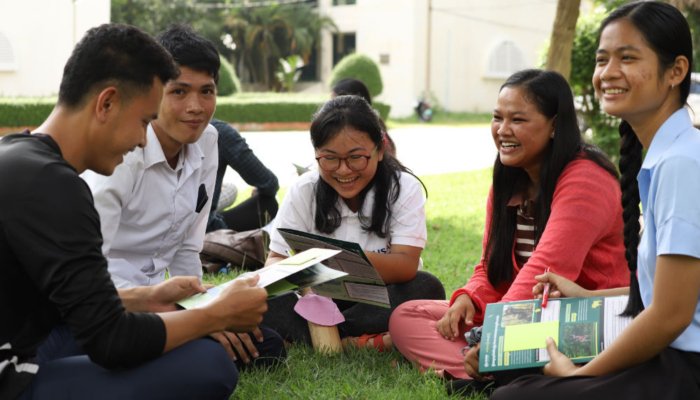
Youth-led Activities, Phnom Penh, Cambodia.
Credit: Maly Phou
Our projects
Recent projects

ASEAN-UK Health Security Partnership (HSP)
The ASEAN-UK Health Security Partnership (HSP) is a five-year initiative focused on strengthening health security and improve equitable access to…

Partnership for Learning for All in Nigeria (PLANE)
The UK FCDO-funded Partnership for Learning for All in Nigeria (PLANE) Programme is a seven-year programme that supports and realises…

Isnad - Empowering Palestinian Institutions and Civil Society (EPICS)
ISNAD is a key component of the UK Government’s support to the Palestinian Authority, working with the Palestinian Authority to…