Home > What do games have to offer us as we navigate complexity?
What do games have to offer us as we navigate complexity?
24th July 2025
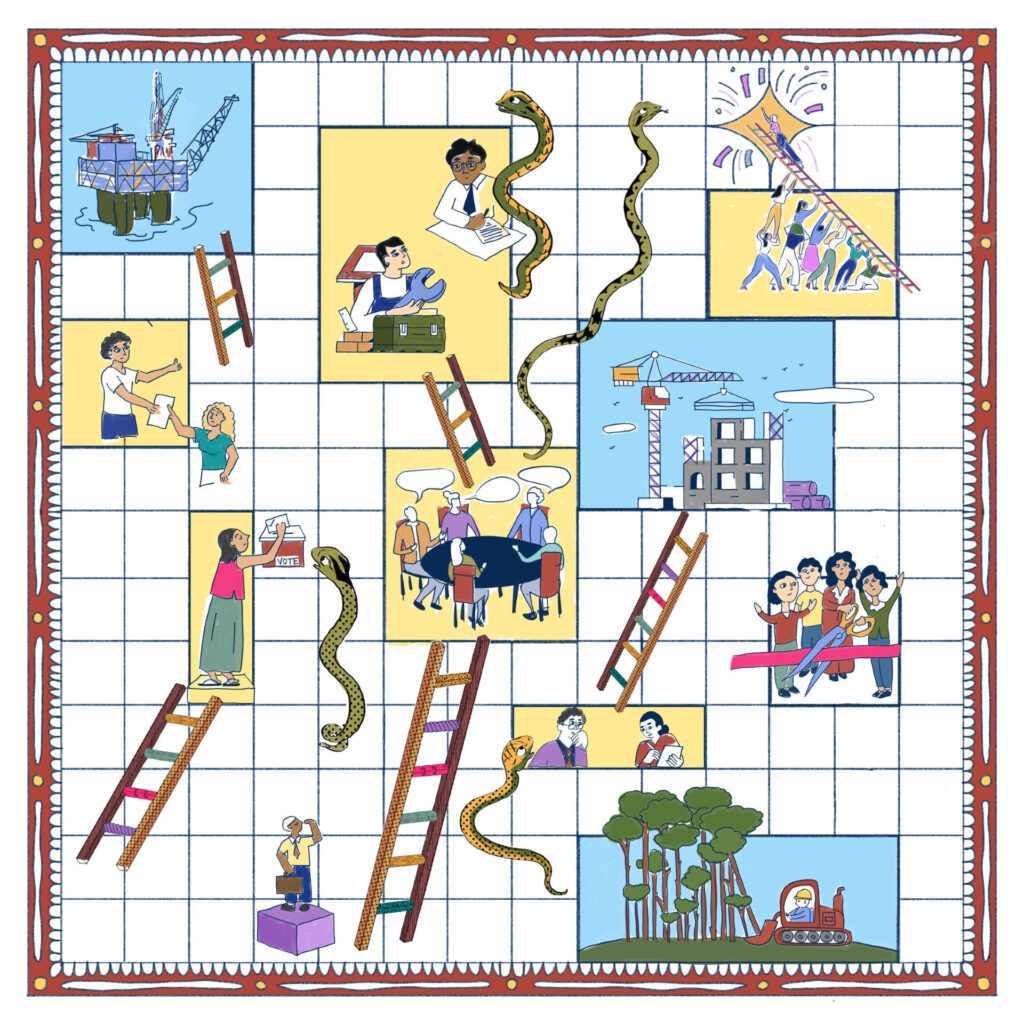
Source: Graphic by Bushra Saleem (IDS) from an original design by the authors.
In the face of shrinking civic space and declining funding for accountability and service delivery, this report draws on our work under the UK aid-funded POTENCIAR programme in Mozambique to highlight the value of politically informed, adaptive approaches that prioritise collaboration. Using the metaphor of Snakes and Ladders, the analysis illustrates how collaboration—taking many forms from information sharing to informal coordination to structured alliances—can help navigate complex power dynamics and extend limited resources. Drawing on six case studies and introducing a “Ladder of Collaboration” framework, the findings underscore the importance of evidence-based strategies that think and work politically (TWP), rely on continuous issue-based engagement, and adapt to shifting contexts in order to achieve sustainable impact. In restrictive, resource-constrained environments, these flexible, trust-based approaches offer a practical and effective route to strengthening governance and accountability.
For more information on FHI 360 UK’s political economy analysis and working and thinking politically please contact Karin Alexander KAlexander@fhi360uk.com
24th July 2025
About Author:
Karin Alexander
Karin Alexander is the Governance and Accountability Lead at FHI 360 UK, bringing over a decade of experience working across diverse political and institutional contexts as a political economy lead on UK-funded adaptive programmes. She is committed to supporting programme teams and partners to embed politically informed thinking into their everyday work through practical, capacity-strengthening approaches.
HSP champions One Health to fortify ASEAN against pandemics and climate-driven threats, viewing One Health as essential for multisectoral, equitable, climate-aware action via UK-ASEAN ties. We fund projects that embed OH across grants and peer exchanges for priorities like zoonoses, emergency response, AMR, climate-health risks, workforce development, digital health, and food safety.
The ASEAN-UK Health Security Partnership (HSP) is a five-year initiative focused on strengthening health security and improve equitable access to primary care across the ten ASEAN member states and Timor-Leste.
The UK FCDO-funded Partnership for Learning for All in Nigeria (PLANE) Programme is a seven-year programme that supports and realises the Federal Government of Nigeria’s commitment to delivering sustainable improvements in learning outcomes for all children in Nigeria.
ISNAD is a key component of the UK Government’s support to the Palestinian Authority, working with the Palestinian Authority to build the capabilities of ministries to move towards fiscal sustainability, increased accountability and improved delivery of public services to Palestinians by reforming the core cycle of planning, budgeting and monitoring of government service delivery.
HSP champions One Health to fortify ASEAN against pandemics and climate-driven threats, viewing One Health as essential for multisectoral, equitable, climate-aware action via UK-ASEAN ties. We fund projects that embed OH across grants and peer exchanges for priorities like zoonoses, emergency response, AMR, climate-health risks, workforce development, digital health, and food safety.
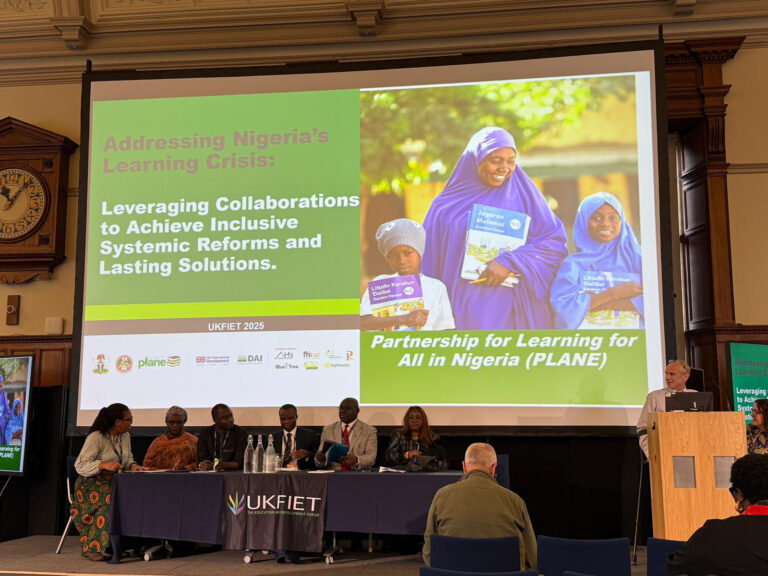
In September 2025, I had the privilege of attending the UKFIET 2025 Conference in Oxford, where education professionals, researchers, and policymakers from around the world gathered to explore how knowledge, partnerships, and innovation can drive sustainable development through education.
As the aid environment becomes more complex—marked by shifting donor priorities, tighter budgets, and growing demands for accountability—systems strengthening offers a pathway to durable, scalable solutions.
Choosing the right systems strengthening framework to guide your work can make the difference between a well-intentioned intervention and a transformative, sustainable reform.
In this first post of our three-part series on systems strengthening, we explore the fundamentals: What is a system, and what is systems thinking and strengthening?