Skip to content

System Strengthening – Which Framework Best Complements Your Objectives?

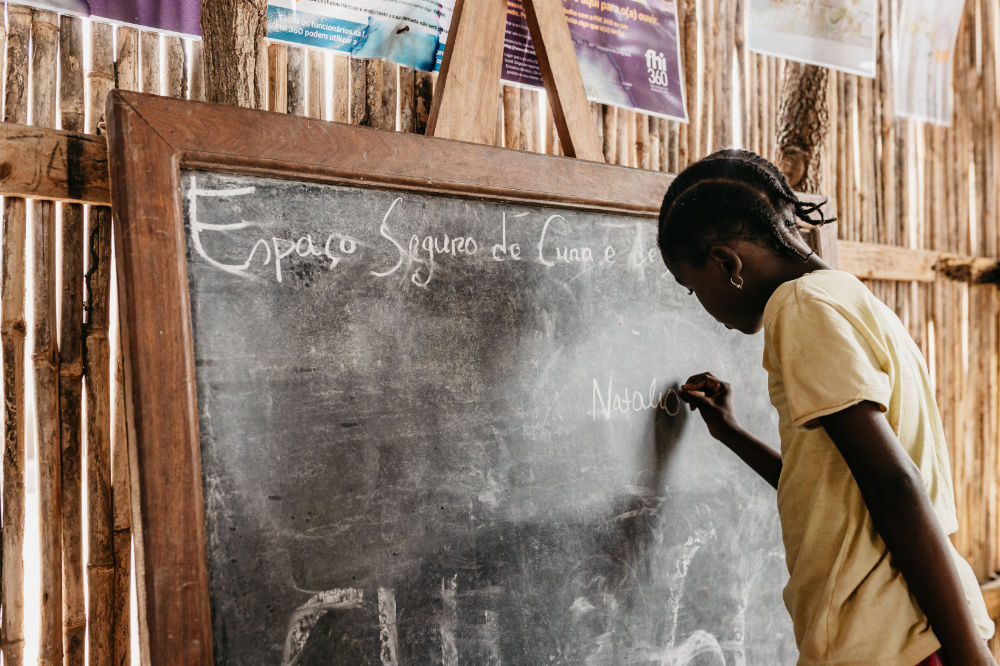
A child writes on a chalkboard at a safe healing and learning space in Mozambique’s Cabo Delgado province. FHI 360 responded to the humanitarian crisis in Cabo Delgado with the Integrated Response to Affected Mozambique Populations (IRAMP) project, funded by USAID’s Bureau for Humanitarian Assistance. Through IRAMP, FHI 360 provided emergency health, protection, and water, sanitation and hygiene assistance. Photo credit: Mbuto Machili for FHI 360

FHI 360 UK drives lasting change in education by strengthening the systems that support learning. FHI 360 has over 50 years of experience in 90+ countries, we partner with governments and communities to build inclusive, resilient education systems. Our work includes improving teacher training and data systems in Ghana, supporting national education reform in Liberia, and embedding community-led literacy in policy in Rwanda, reaching over 1.3 million children. As a global thought leader, we also advise donors and governments on systems thinking through panels, research, and technical support.


Choosing the right systems strengthening framework to guide your work can make the difference between a well-intentioned intervention and a transformative, sustainable reform. At FHI 360 UK and FHI 360, we’ve learned—through decades of experience—that context matters, and that the tools we use must align with the goals we seek to achieve.


This is the second part in our three part series about systems strengthening, coming later in the year FHI 360 UK and FHI 360 will share thoughts on systems strengthening for practitioners. Across our global portfolio, we’ve applied a range of systems strengthening frameworks to support education reform. In Ghana, we’ve used adaptive learning models to improve foundational skills at scale. In Liberia, we’ve supported the development of national education sector plans grounded in systems diagnostics. And in Rwanda, we’ve helped embed community engagement into national literacy strategies using participatory systems mapping.


👉 New to the series? Start with “What Is Systems Thinking and Systems Strengthening?

👉 Later in the series, explore: “Technical Assistance and Systems Strengthening in a Changing Aid Landscape”.


The Promise and Pitfalls of Competing Frameworks

The landscape of systems strengthening is marked by a proliferation of competing frameworks, as noted in Blog 1 ‘What is Systems Thinking and Systems Strengthening’, each offering distinct perspectives on what constitutes a system and how it should be understood, diagnosed, and influenced. From USAID’s 5Rs1, which emphasizes relationships and locally led development, to the World Bank’s SABER framework focused on service delivery and institutional mechanisms, and the RISE 5×4 Framework that applies a political economy lens, these models reflect divergent theoretical underpinnings and practical applications. Some frameworks prioritize the ‘what’—the structural elements of a system—while others delve into the ‘who’ and ‘why’, exploring actor relationships, motivations, and contextual dynamics.


For those working in the field—whether as donors, government officials, or practitioners—this diversity can be a real asset. It allows different actors to select frameworks that align with their priorities and contexts. Donors can back approaches that reflect their values, such as sustainability or accountability. Governments can adopt models that fit their institutional realities and reform ambitions. And practitioners benefit from the flexibility to adapt tools to local needs, drawing on a wide range of perspectives to better understand the systems they’re trying to influence. This plurality also encourages innovation and cross-sector learning, helping to build a more nuanced and responsive approach to systems change.


But this richness comes with real challenges. Without a shared understanding of what a “system” actually is, efforts to strengthen it can become fragmented and incoherent. Donors may end up funding overlapping or even conflicting initiatives. Governments can be overwhelmed by competing models, each with its own language and logic. And practitioners are often left trying to reconcile frameworks that weren’t designed to work together. Several of these models are highly academic—dense with theory, jargon, and conceptual complexity—which makes them difficult to access and apply in real-world settings and divorced from practical applied toolkits. The result is a gap between theory and practice, where the tools meant to guide action are too abstract to be widely used. As investment in technical assistance and applied systems strengthening is expected to grow in the coming years, the challenge isn’t about picking the “best” framework—it’s about creating shared tools and language that help us navigate complexity together, and making systems thinking and systems strengthening something everyone can use.


Building on the topics introduced in blog 1, in the next section, FHI 360 UK and FHI 360 will reflect on widely used systems strengthening frameworks—exploring what each one emphasizes, who it’s designed for, and how it approaches the complexity of real-world systems.


When Frameworks Get Too Rigid: Lessons from Health

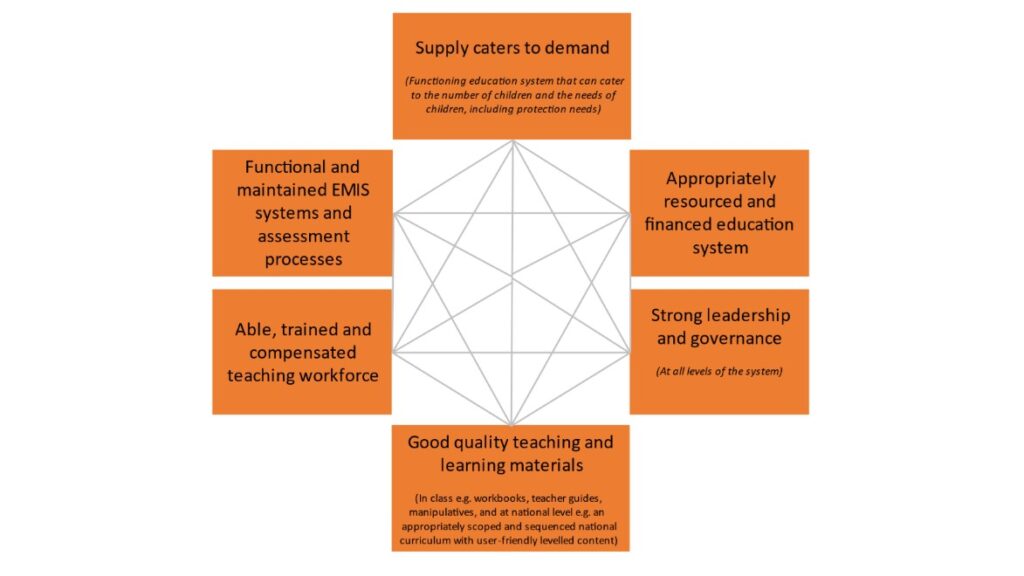
One of the most well-known systems frameworks comes from the health sector. Back in 2007, the World Health Organization introduced the “six building blocks” of health systems strengthening—service delivery, health workforce, health information systems, access to essential medicines, financing, and leadership and governance. This model has since been adapted for education, offering a structured way to map out the key components of a system. It’s clear, easy to communicate, and has helped many actors—especially governments and donors—identify where to invest.
While it’s a useful starting point, this framework has its limitations. Critics argue that it’s too static to reflect the dynamic, messy reality of how systems actually work. It focuses heavily on the supply side—what governments and institutions provide—while overlooking the demand side, like the needs and perspectives of learners, families, and communities. It also assumes a level of stability that doesn’t always exist, especially in crisis-affected settings. And while it does a fair job of outlining the “what,” it falls short on the “who,” “why,” and “how” of the system —the relationships, motivations, and strategies that drive real change.


Zooming In on Outcomes: The SABER Approach

The World Bank’s SABER (Systems Approach for Better Education Results) framework takes a more diagnostic, outcomes-focused approach to systems strengthening. It’s designed to help countries assess how well their policies and institutions are supporting learning, by tracking outcome trajectories over time and across grades. SABER offers structured tools to evaluate key areas like governance, accountability, financing, and school management, and includes a framework for analysing service delivery at the school level. For governments and donors looking for a clear, policy-oriented snapshot of system performance, SABER can be a powerful tool.

However, its strengths are also its limitations. SABER tends to view systems through a technical and institutional lens, focusing on the mechanics of policy and delivery rather than the human relationships that drive change. It pays less attention to the “who”—the actors, motivations, and power dynamics that shape how systems function. This makes it less useful for understanding the relational and adaptive aspects of systems, particularly in contexts where trust, collaboration, and local agency are critical. In short, SABER offers valuable insights into the “what” and “how much” of system performance—but leaves important questions about the “who,” “why,” and “how” unanswered.


Putting People at the Centre: USAID’s 5Rs Frameworki

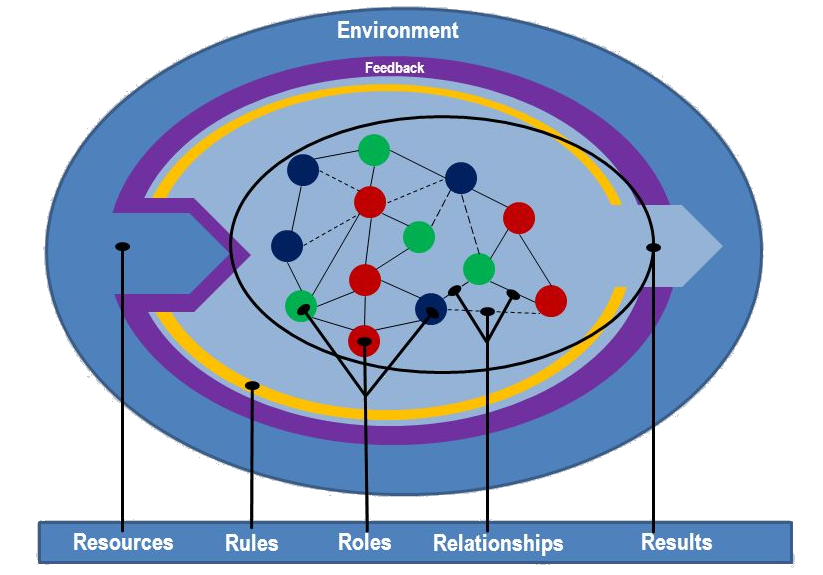
While many systems frameworks focus on structures and policies, USAID’s 5Rs framework takes a human-centred approach. Rooted in the principle of locally led development, it emphasizes the importance of relationships and roles—the “who” of the system—as much as the “what.” The five Rs stand for Resources, Roles, Relationships, Rules, and Results.

  1. Resources are the inputs—budgets, materials, and infrastructure—that systems transform into outputs.
  2. Roles define the actors involved, from producers and funders to advocates and consumers.
  3. Relationships capture the interactions between these actors, whether hierarchical, collaborative, or transactional.
  4. Rules are the formal and informal norms that shape how roles and relationships operate.
  5. Results go beyond traditional outputs to include the overall strength and resilience of the system itself.

USAID, 2025

This framework is particularly valuable for practitioners and donors working in complex, decentralized, or fragile contexts. It encourages a broader view of systems—one that includes community actors, informal networks, and the social dynamics that often make or break reform efforts. It’s also more accessible than many academic models, making it easier to apply in real-world settings.

While this framework does a good job of identifying key components of a system, it doesn’t clearly articulate how these elements interact. The relationships between the Rs—how rules shape roles, or how relationships influence results—are left implicit. This can make it harder to use the framework as a diagnostic or planning tool, especially when trying to trace cause and effect or design targeted interventions. Prior to the closure of USAID, a growing body of linked tools was being built for the 5Rs framework, however, much of this work has since been lost, and adoption of the tools was sporadic given that its use was rarely encouraged by donors.


RISE: A Framework for Political Economy Analysis

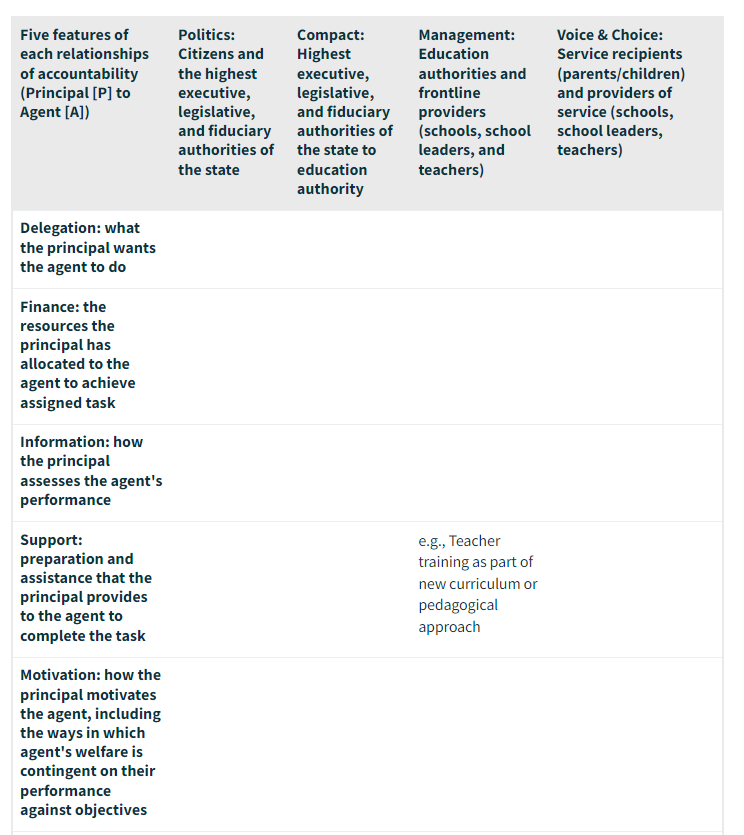
The RISE 5×4 Education Systems Framework is one of the more ambitious and analytically rich models in the systems strengthening space. It’s built around the idea that education systems are shaped by relationships—specifically, four key ones: politics, compact, management, and voice and choice. These relationships are then analysed through five features: delegation, finance, information, support, and motivation. Together, these 20 intersections form a matrix that maps how relationships and actors interact and influence outcomes.

Pritchett, 2015

This framework is particularly strong when used for political economy analysis. It helps unpack the incentives, power dynamics, and accountability structures that often determine whether reforms succeed or stall. But while the framework is conceptually robust, it’s not always easy to apply in practice. For many practitioners, the 5×4 matrix can feel overly complex and abstract—better suited to academic papers than programme design or implementation. It also assumes a level of coherence and alignment within the system that doesn’t always exist, particularly in low- and middle-income countries where education systems may be fragmented, under-resourced, or operating in crisis. The model starts from the premise that there is a shared goal of education improvement, but in many contexts, that goal is unclear or deprioritized in practice. The number of linked tools, paving the way between the systems thinking framework and applied systems strengthening are limited.


Principles Over Prescriptions: Brookings’ Three Ps and the ALIGNS Approach

Some frameworks don’t try to map every actor or policy lever—instead, they start with principles. Brookings’ “Three Ps” for systems transformation—Purpose, Pedagogy, and Position—offer a values-driven approach to reimagining education systems. The idea is simple but powerful: build a shared vision (Purpose), redesign the core of teaching and learning (Pedagogy), and align all parts of the system to support that core (Position). What sets this model apart is its emphasis on deep engagement from across the system—educators, families, communities, students, ministry staff, and partners all have a role to play. The RISE programme builds on this with its ALIGNS principles, which focus on aligning instruction with children’s learning levels, supporting teachers, and tailoring implementation to context. Both models reject the idea of a one-size-fits-all solution and instead embrace the messiness of real systems.

But while these principles are compelling, they come with trade-offs. They don’t offer a clear definition of the system itself—its boundaries, components, or actors. The “what” and “who” are often implied rather than spelled out, which can make these frameworks harder to operationalize. In short, principles-based frameworks are excellent for setting direction and fostering shared purpose, but they often need to be paired with more concrete tools to guide action on the ground.


A Simpler Way to See the System: FHI 360 UK and FHI 360’s The 6Ws Model

Among the many frameworks used to understand and strengthen systems, FHI 360 UK and FHI 360 have developed a model that’s straightforward, designed with the end user in mind: The 6Ws Who, What, Where, Why, When, and hoW. While it may sound deceptively simple, this model is grounded in the complexity of real-world systems and is designed to be both accessible and adaptable. It was introduced in our first blog as a way to cut through the noise of competing frameworks and provide a common-sense structure for thinking about systems change.

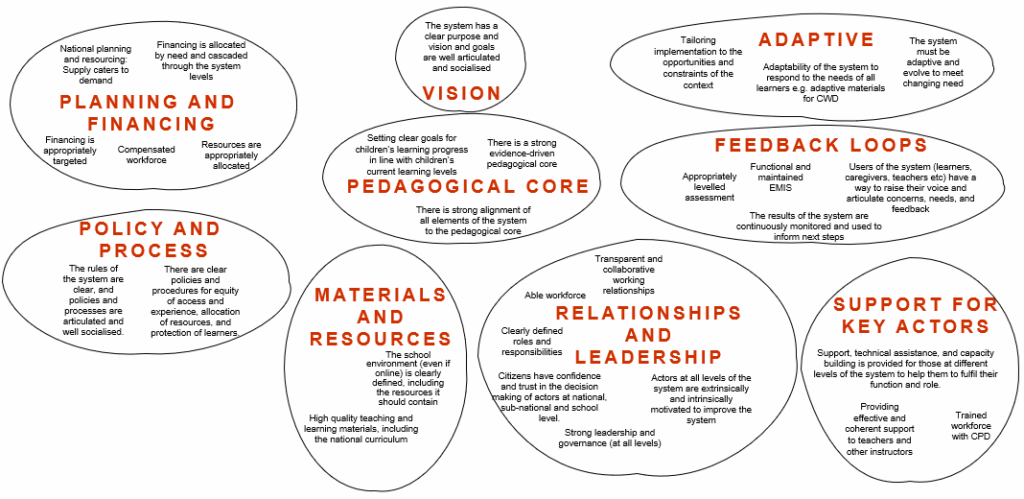
FHI 360 UK and FHI 360 have mapped the most commonly used systems strengthening frameworks and grouped the key attributes of those models. In the figure below, the text in black is sourced directly from different frameworks, and the text in red is FHI 360 UK’s attempt to cluster similar themes.

After several internal and external consultations, FHI 360 UK and FHI 360 mapped this to the 6Ws Who, What, Where, Why, When, and hoW, and identified the relationship between these different components, this facilitated the development of a practitioners toolkit for systems strengthening that maps across the components of a system and the levels of a system, supporting field-based staff to identify opportunities, diagnose capacity, and prioritize interventions.

At its core, the 6Ws Who, What, Where, Why, When, and How model is a diagnostic and planning tool. It prompts users to ask:

  1. What are the components, resources, and structures of the system?
  2. Why do the components of the system behave in this way —what are the incentives, histories, policies, and power dynamics at play? Why are the component part not generating the desired results?
  3. Who are the key actors and stakeholders, which relationships are influential, who are the gatekeepers
  4. Where are the leverage points, bottlenecks, or gaps—geographically or institutionally?
  5. When do opportunities for change arise—what are the rhythms, cycles, or windows of influence? Is it aligned to national planning cycles?
  6. How can the system be influenced or strengthened, how can we intervene effectively—what strategies, tools, or partnerships are needed?

The FHI 360 UK and FHI 360 framework is accessible to governments and can demystify the “systems strengthening” process which can be intimidating. What makes this model stand out is its usability; it doesn’t require a background in systems theory to use—it just requires the right questions to be asked. FHI 360 UK and FHI 360 have developed systems strengthening tools, checklists, and facilitation guides, helping practitioners to map systems in real time, identify key actors and bottlenecks, structure policy dialogues, align cross-sectoral initiatives, and articulate clear, evidence-based talking points for reform, structure research and evidence frameworks, and co-design interventions with local stakeholders. The model’s clarity and adaptability have made it especially valuable in contexts where coordination across multiple actors and institutions is essential for sustainable change. Future blog articles will detail how this framework and the accompanying tools can be leveraged by practitioners.

For more information on FHI 360 UK’s approach to systems strengthening please contact Holly-Jane Howell hjhowell@fhi360uk.com or Kate Pavelich kpavelich@fhi360.org at FHI 360

Notes:
i The USAID 5Rs framework was developed and formally introduced in 2014 through USAID’s Local Systems Framework, and actively used across programming from 2014 to early 2025. As of July 1, 2025, the 5Rs framework is no longer the guiding approach for remaining USG development programs, which now operate under the US State Department.

About Authors:

Holly-Jane Howell

Holly-Jane Howell is a senior technical specialist in education and Education Director at FHI 360 UK. She has over 15 years of experience working in over 30 countries, has served as the Head of Education for FCDO Syria, has been embedded as technical assistance within four Governments in low- and middle-income settings, and has served as a team leader for over 10 large-scale programmes. Her areas of expertise include Team leadership and programme delivery, systems strengthening, the development of teaching and learning materials, leading education strategy and policy development, behaviour change communication, GEDSI, and education in emergencies.

Connect via:

Kate Pavelich

Kate Pavelich is a Technical Advisor for Education at FHI 360, where she focuses on education systems strengthening. She brings over a decade of experience in education programming and policy advising. Her work has included leading education NGOs in Uganda, Peru, and Guatemala, as well as serving as an embedded adviser to the Ministry of Education in Liberia and the Ministry of Social Development in Panama. In these roles, she specialised in linking research and evidence to policy and practice in complex political environments.

Connect via:

2025: A Year in Review

As we enter 2026, FHI 360 UK would like to take the opportunity to reflect on the achievements and milestones from 2025.
More

Nigeria Public Finance Facility

FHI 360 UK are happy to announce the launch of the FCDO Nigeria Public Finance Facility (NPFF) programme.
More

Reflections from UKFIET 2025: Mobilising Knowledge for Sustainable Education Futures

In September 2025, I had the privilege of attending the UKFIET 2025 Conference in Oxford, where education professionals, researchers, and policymakers from around the world gathered to explore how knowledge, partnerships, and innovation can drive sustainable development through education.
More