
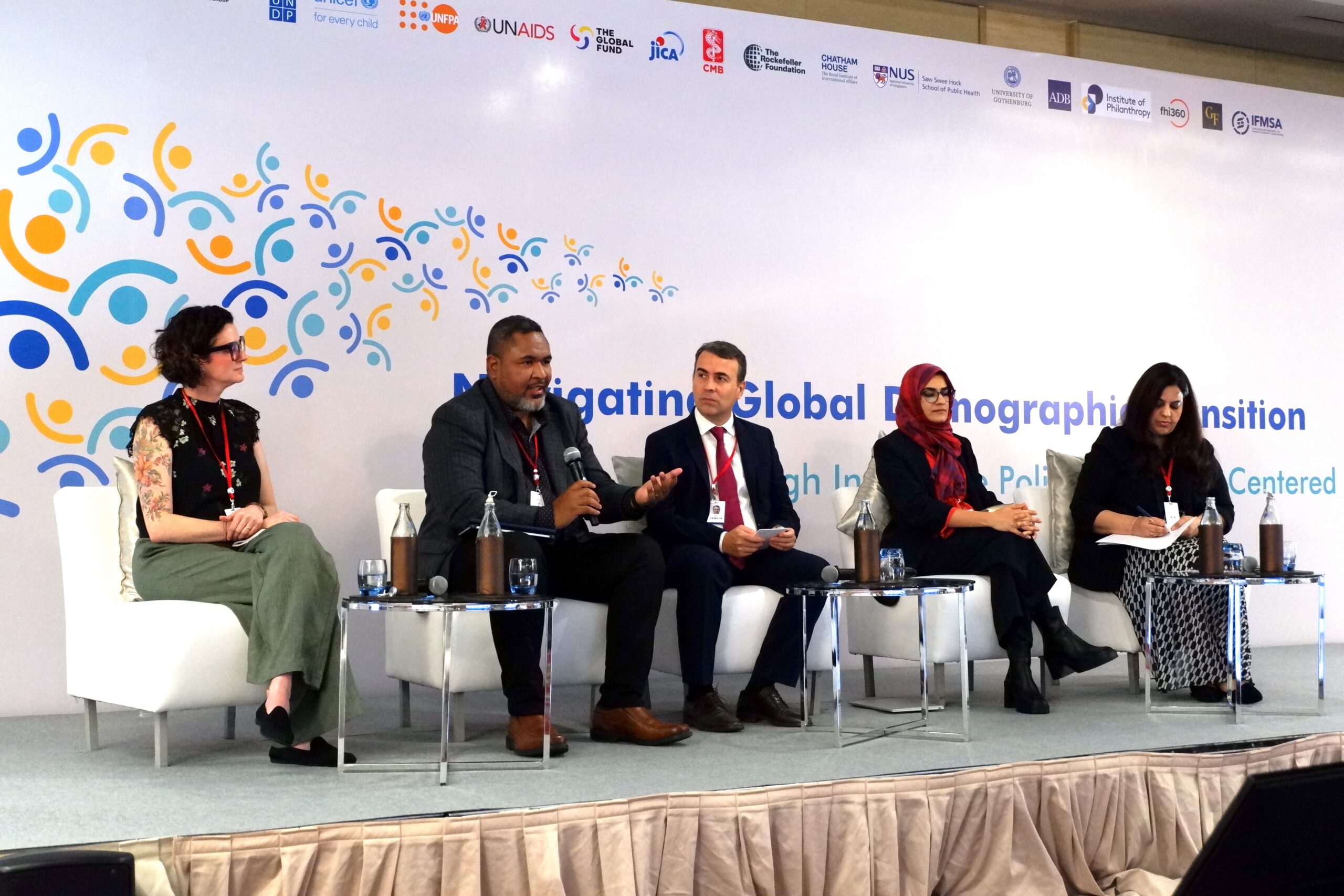
Bangkok, Thailand, 31 January 2026 – Demographics and aging may not seem like critical pieces of the health security puzzle, but aging is increasingly beginning to strain national health systems in the ASEAN region and in key ways will shape our response. Declining fertility rates, longer life expectancies, and improved mortality rates are all going to be felt in different ways. Already, the working-age population is shrinking faster than can be replaced in Brunei. In Singapore the share of population above age 65 will soon reach 20%. Thailand, for its part, is already the most aged society in Southeast Asia and one of the fastest-aging in the world.
Navigating these global demographic transitions was the theme at this year’s Prince Mahidol Award Conference (PMAC) 2026, where the ASEAN-UK Health Security Partnership (HSP) team joining over 1,000 other health experts and practitioners. The conference provided an important platform for HSP team to gain insights on health security from various perspectives across multiple sessions.
Across the week-long programme, discussions focused on improving long-term and elderly care, using digital technology to strengthen health services and predict demographic and epidemiological shifts, and ensuring equal access to care. Government representatives, policymakers, researchers, academia, development partners, and funders from across the region and beyond participated in the conference.
Relevance to HSP and ASEAN interests
From the start, PMAC 2026 underscored how demographic transition is deeply intertwined with health security. Topics at the conference, such as One Health, climate change and health, technological innovation in healthcare, and building resilient health systems amid demographic shifts, all have direct implications to national, regional and global health security, affecting populations across ASEAN as well as in the UK. These shared challenges reinforce the relevance of HSP’s participation at PMAC, which was to engage with emerging ideas and discussions that help inform health security thinking, recognising that demographic change shapes disease patterns, workforce needs, system resilience, and preparedness for future health emergencies.
HSP’s participation reflected its commitment to strengthening health security through resilient systems, regional collaboration, and evidence-informed policy. PMAC provided a valuable platform to exchange ideas and see how HSP-supported work fits into broader regional and global health discussions.
Key takeaways aligned with HSP priorities
Within the HSP programme, two of the health priorities of our grant making – Human Resources for Health (HP19) and Universal Health Coverage, including health financing, and service delivery (HP 16) – are most relevant to issue of ageing and both are key areas of our grant making. Within these priorities, the discussions we heard at PMAC highlighted the continued need for us to:
- Strengthen workforce education and capacity to respond to demographic and epidemiological transitions.
- Leverage digital technologies and predictive analytics to anticipate health risks and enable timely and coordinated responses.
- Advance climate-smart and sustainable healthcare systems by using digital technologies to strengthen surveillance and resilience to climate-related health threats.
- Generate robust evidence and data to inform policy from national to global levels.
These insights reaffirm the relevance of HSP’s mission to collectively strengthen health security in ASEAN, while offering perspective on how demographic trends intersect with health security discussions today.