
Why strong education systems drive economic growth
- 16th September 2026
by Holly-Jane Howell, Associate Director, Education
Few investments can generate trillions of dollars in economic returns. Education is one of them.
Strengthening education systems is one of the most powerful investments a country can make in its future. Ultimately, economic mobility is driven by human capital, and human capital is built through education. The countries that will thrive in the decades ahead will not necessarily be those with the greatest natural resources. They will be those that are best at developing the talents, skills, and potential of their people.
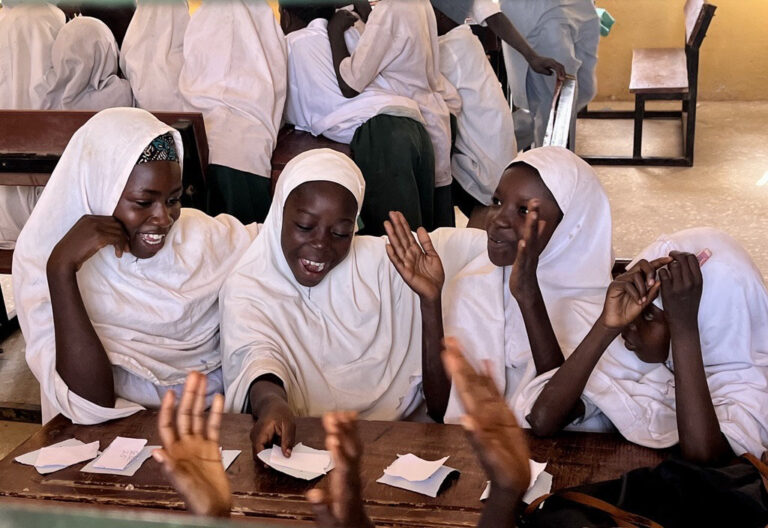
For many years, the global education community focused on access. We built schools, enrolled learners, and expanded participation. Those gains matter enormously. But the frontier has shifted. Today, the challenge is not simply getting young people into school. It is ensuring they learn once they get there. As development economist Lant Pritchett famously observed, “schooling ain’t learning.”
Young people don’t realise their potential because they attend school. They realise their potential because they learn. They learn to read, solve problems, think critically, and develop the skills that enable them to participate fully in society and the economy. Learning creates opportunity. Opportunity creates mobility.
The economic cost of the learning crisis
The economic stakes of not investing in education could not be higher. UNESCO estimates that the world loses trillions of dollars each year because learners leave school early, fail to acquire foundational skills, or miss out on learning opportunities altogether. The cost of failing to improve learning is no longer simply an education issue. The learning crisis is rapidly becoming an economic crisis.
What’s particularly striking is that we’re now able to quantify just how significant the economic returns to learning can be. Recent modelling from the What Works Hub for Global Education suggests that increasing the proportion of 10-year-olds achieving minimum reading proficiency to 90% could unlock an estimated $196 trillion in additional GDP by 2050, alongside 368 million more children completing primary school, 423 million more progressing to secondary education, 49 million additional young people entering employment, and significant gains in health, wellbeing, and social outcomes.
From evidence to scale
The challenge is no longer identifying what works. It’s making what works work at scale. We already know a great deal about how people learn. We know the importance of foundational literacy and numeracy. We know that teachers need high-quality instructional materials, coaching, and support. We know that data, accountability, and school leadership matter. The real challenge is helping education systems deliver these proven approaches consistently to millions of learners.
The question isn’t whether an intervention works. It’s whether the system can keep it working. Learning is the product of curriculum, teachers, assessment systems, school leadership, financing, governance, and community engagement working together in a coherent way.
Strong systems, strong economies
Strong education systems create strong economies because they build human capital at scale. They create the conditions for learning to happen not just for one cohort of students, but for every cohort that follows. They ensure that opportunity is not determined by where a person is born, but by what they are capable of becoming.
Economic mobility begins with learning, but learning only reaches every child when systems make it possible. The countries that invest in building stronger education systems today will be the ones that unlock greater prosperity, resilience and opportunity for generations to come.
Holly-Jane Howell is a senior technical specialist in education and the Associate Director of Education at FHI 360 UK. She has over 15 years of experience working in over 30 countries, has served as the Head of Education for FCDO Syria, has been embedded as technical assistance within four governments in low- and middle-income settings, and has served as a team leader for over 10 large-scale programmes.